How to Stay Focused While Studying at Home
Home is the hardest place to study in Nigeria — visitors, noise, phone, fridge. Here is a realistic system to protect your focus without moving out.
4 min read
When I decided to study from home during a semester break, I told myself I would be more productive than in the hostel. No roommates, no parties at 2 a.m., no generator arguments. By day four, I had discovered that home has its own attacks: visitors at 10 a.m., "come and help me in the kitchen", the fridge two steps away, and a neighbour's speaker that treats every afternoon like a festival.
Home is not quieter than the hostel. It is just differently loud. Focus at home is not about willpower; it is about structure. Here is the structure that worked for me.
Build a study spot, even a small one
You need one place that means only one thing: work.
- A corner of a room, a table, even a sturdy plank on blocks — but not your bed, and not the spot where you watch videos.
- Everything you need within arm's reach: notebook, past questions, pen, water, a lamp or torch.
- Something visual that signals "occupied": a chair pulled out, a sign on the door, headphones around your neck.
Your brain learns associations. If you study in the same square of floor every day, after about a week your body starts settling into work mode the moment you sit down. If you move around the house every session, you restart that warm-up every single time.
Agree with your house before you start
The biggest focus killer at home is not noise — it is unexpected requests. So make the arrangement explicit.
Tell the people you live with, in plain words:
- "From 8 to 10 every morning, I am studying. If it is not an emergency, catch me after."
- Show them your timetable on the wall. People respect a written plan more than a spoken one.
- Ask for one specific help: "If visitors come, just tell them I am around after 10."
Most families are not trying to disturb you; they simply do not know you are working. Once they know, the kitchen summons drop dramatically.
Your phone is the main enemy, name it
No system survives a phone face-up on the desk. What actually works:
- Move it physically. Another room, with your family, or under your mattress across the room. Reach is the real switch, not willpower.
- Kill the silent killers. Turn off auto-play, mute all groups, log out of social apps during the week and log back in on Saturday. Re-logging is a friction that works.
- Batch your checks. Decide when you are allowed to open WhatsApp — say 1 p.m. and 7 p.m. — and check properly then, instead of 140 tiny raids on your attention all day.
- Use the phone for study only, with a timer. When a session needs the phone (a video, a PDF), start a 25-minute timer before you pick it up. When it rings, the session is over, whether you like it or not.
The home-proof timetable
Home days fail when they have no edges. Give every day three fixed points:
| Time | Rule |
|---|---|
| Morning block (60–90 min) | Hardest course, before the house fully wakes or right after breakfast |
| Midday anchor | Eat, rest, short walk — a real break, not a phone coma |
| Evening block (60 min) | Recall and past questions on what you read that day |
Attach the blocks to fixed home events: after morning prayers, after the market run, after dinner. Time that hangs on a habit gets found; free-floating time evaporates.
Handling the noises you cannot control
- Speaker music, loud neighbours, market noise: cheap foam earplugs under headphones, or move your spot to the quietest wall. Many of my best hours happened at 5 a.m. simply because nothing else is awake then.
- Family TV: negotiate one show-time you can watch guilt-free, so saying no feels like a swap, not a punishment.
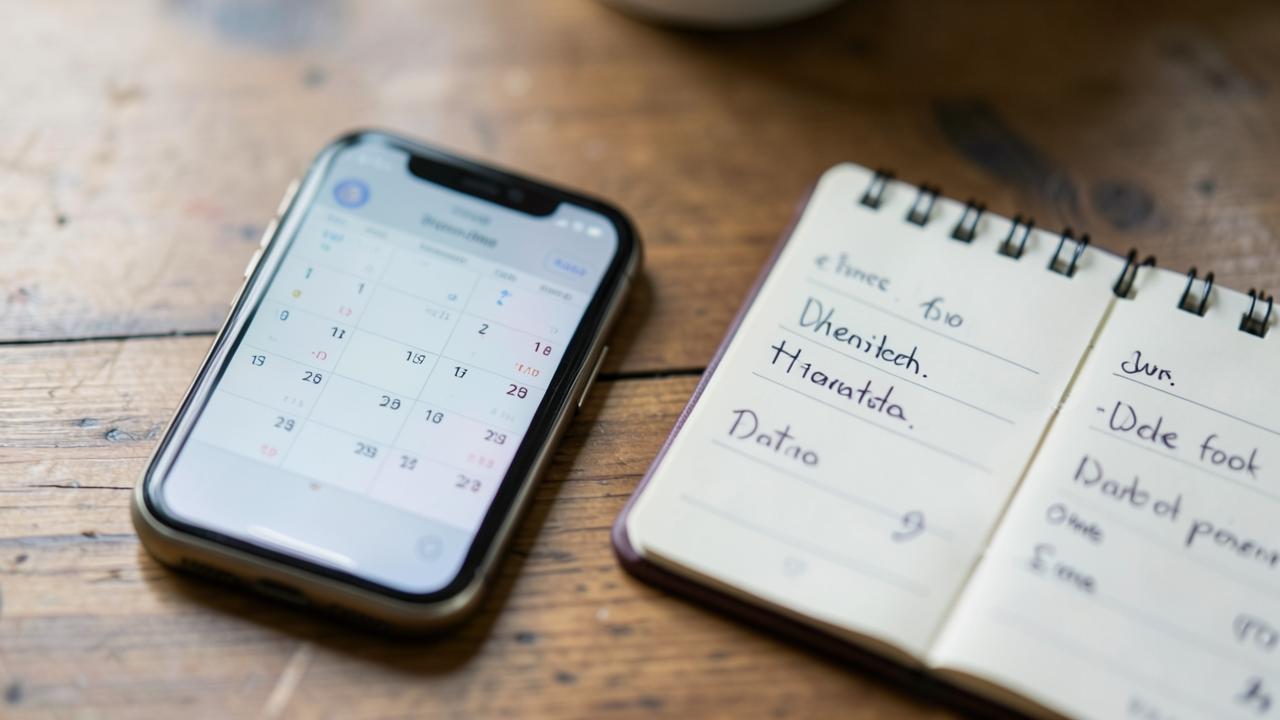
- Your own thoughts: keep a notepad beside you. Every distracting thought — "call Tunde", "check price of rice" — gets written down and dealt with after the block. Writing it down tells your brain it is not being lost.
The chores problem
Home expects you to contribute, and it should. The fix is scheduling, not martyrdom:
- Tell whoever assigns chores when you can do them: "I can fetch water at 10:15 after my block."
- Do chores as real breaks — walking, carrying, stretching. They restore focus better than scrolling does.
- If a task will interrupt your hardest block, trade it: offer to do it earlier instead.
Saying "not now, at 10:15" with a specific alternative is respected. Saying "later" forever is not.
When home stops working entirely
Some houses are genuinely unworkable some days — a guest is staying, a funeral is being planned, the street is under reconstruction. That is not failure; plan for it:
- Keep one backup location: a library, a quiet church or mosque room, an empty classroom, a calm fast-food spot.
- On chaos days, do the work that survives chaos: recall from memory, oral definitions, flashcards, reviewing your own summary sheets.
- Never let a chaos day become a zero day. Twenty stolen minutes is a deposit.
Protect the rest, not just the work
Studying at home has one more trap: the work never stops, so you feel guilty resting and unproductive working. Close your evening block properly — write tomorrow's first task down, pack your materials, leave the study spot. A finished day is easier to start again tomorrow.
Focus at home is built, not found. Pick your corner tonight, tell your house tomorrow, and put the phone across the room before your first block.
Which one of these is your biggest home distraction — visitors, noise, phone, or chores?