How to Study With a Group Without Wasting Time
How Nigerian university students can run a group study session that actually covers work: clear roles, a fixed agenda, time limits and honest self-testing.
4 min read
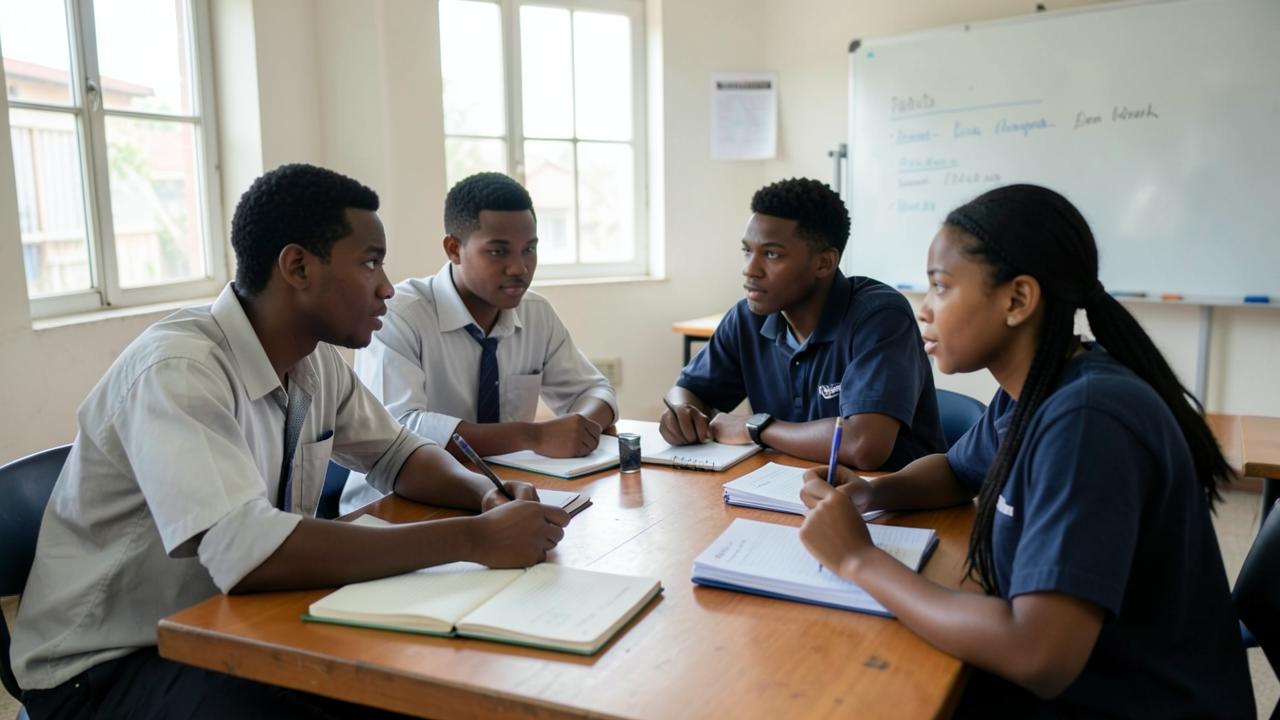
My first group reading session lasted four hours. We covered one page. The rest went into gist, jollof, a long argument about a football match, and someone's phone speaker. We all left feeling tired and pretending it was productive.
Group study is not automatically useful. It becomes useful when it is structured. Done well, it can be faster than reading alone, because explaining a topic out loud exposes exactly what you do not understand.
Decide What the Group Is For
Before fixing a date, answer one question: what will this session do that reading alone cannot?
Good reasons to meet:
- Explaining difficult concepts to each other
- Working through past questions and comparing methods
- Splitting a large syllabus and teaching each part
- Preparing a group presentation or project
Bad reasons to meet:
- "Let us read together" with no topic
- Copying assignments
- Company while everyone reads their own thing silently
If the goal is just quiet reading, the library gives you that without the distraction.
Keep the Group Small
Three to five people is the sweet spot. In a group of ten, two people talk, three listen, and the rest scroll. Small groups make it obvious when someone has not prepared, which is exactly the pressure you want.
Choose people by preparation, not friendship. A serious study group and your friendship circle can overlap, but they do not have to be the same list.
Send an Agenda Before the Session
One short message in the group chat is enough:
Saturday, 4–6pm, Faculty block. CHM201: reaction mechanisms. Each person brings 3 past questions. Tunde explains SN1, Amaka explains SN2, everyone attempts the 2023 paper before we meet.
Now nobody arrives asking, "So what are we reading?"
Give Everyone a Role
| Role | Responsibility |
|---|---|
| Timekeeper | Announces when a topic's time is finished |
| Explainer | Teaches the assigned topic in 10 minutes |
| Question master | Brings past questions and asks them |
| Note keeper | Records agreed answers and unresolved doubts |
Rotate the roles each week so one person is not always carrying the group.
Use the Teach-Then-Test Pattern
The most effective session I ever attended used a simple loop for each topic:
- One person explains the topic in ten minutes, no reading aloud from notes.
- Everyone else asks questions for five minutes.
- The group attempts three questions on that topic silently.
- The group compares answers and settles disagreements with the textbook or lecture notes.
Twenty-five minutes, one topic, real evidence of who understands what.
Set Rules About Phones and Time
Agree openly at the start, not angrily in the middle:
- Phones face down unless needed for a calculation or a PDF.
- Start on time even if two people are late.
- Two hours maximum, with one ten-minute break.
- Gist time is at the end, not in the middle.
A short session that finishes its agenda beats a four-hour meeting that ends in confusion.
Handle Common Nigerian Realities
Practical problems will happen, so plan for them:
- No light: meet in the daytime, or pick a venue with a working generator or inverter. Charge devices before leaving.
- Data costs: download PDFs and past papers before the meeting so nobody streams anything during the session.
- Venue changes: have a backup spot — a lecture hall after hours, the library, or an empty classroom.
- Lecture clashes: fix a repeating slot that fits everybody's timetable rather than negotiating every week.
Watch for the Free Rider
Every group eventually gets one person who never prepares but always attends. The fix is not confrontation; it is structure. When each person must teach a topic, unprepared members become visible immediately. If someone misses their turn twice, quietly reduce the group. Protect your own preparation first.
After the Session, Study Alone
This part gets skipped and it matters most. Group work shows you what you do not know. Fixing it is personal work. Within 24 hours:
- Rewrite the parts you struggled to explain.
- Redo the questions you got wrong, alone, without help.
- Add unresolved doubts to a list and take them to the lecturer or a senior colleague.
Signs Your Group Is Working
- You can explain more topics than you could last week.
- Sessions end at the agreed time.
- Everyone arrives with something prepared.
- Your test scores in that course are moving up.
If none of these are true after three sessions, the group is social, not academic — and that is fine, as long as you are honest about it and study seriously elsewhere.
Final Checklist
Fix a topic, keep the group small, share an agenda, assign roles, teach and test, limit the session to two hours, then revise alone the next day.
What has your experience with group study been so far — has it helped your grades, or quietly eaten your reading time?